
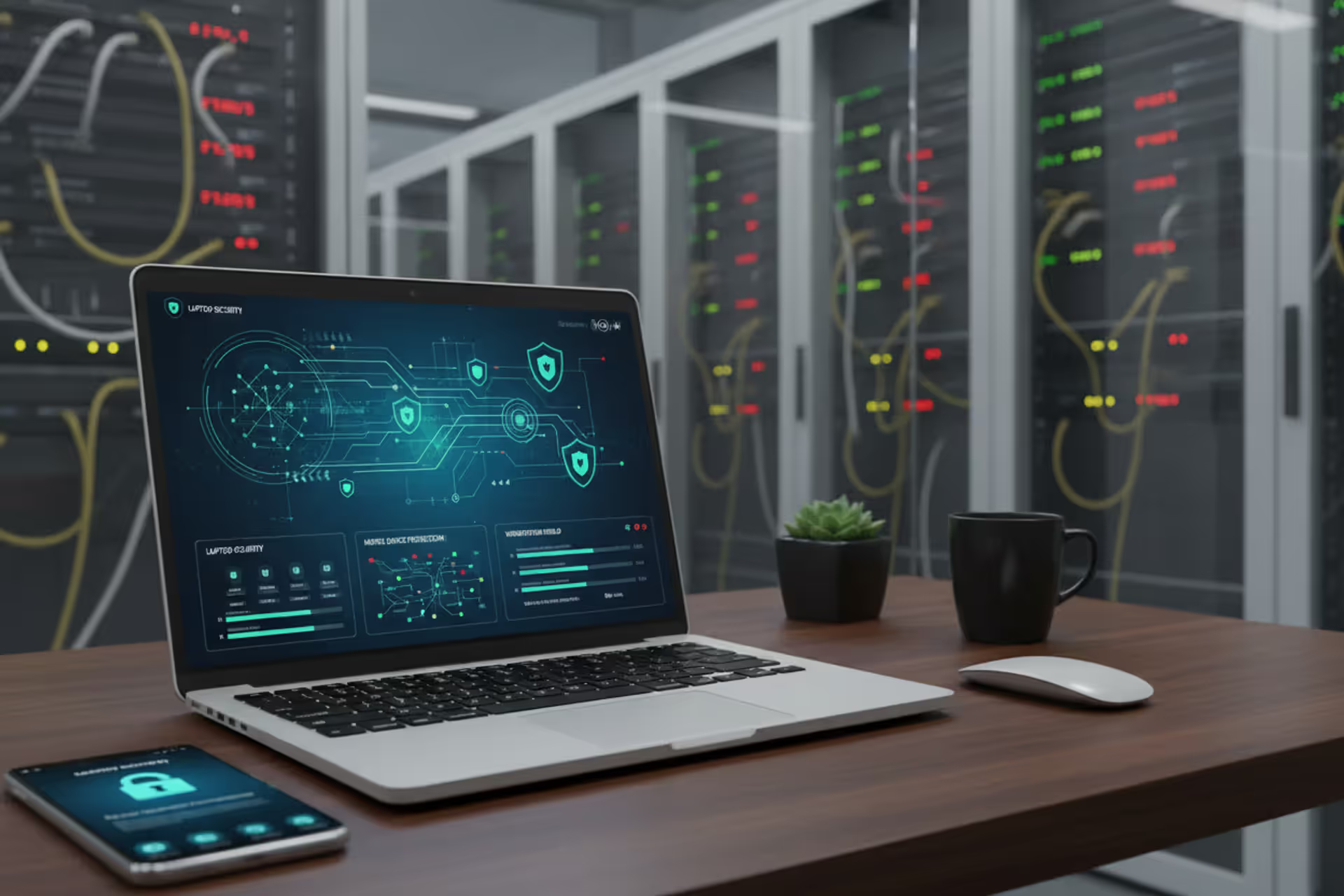
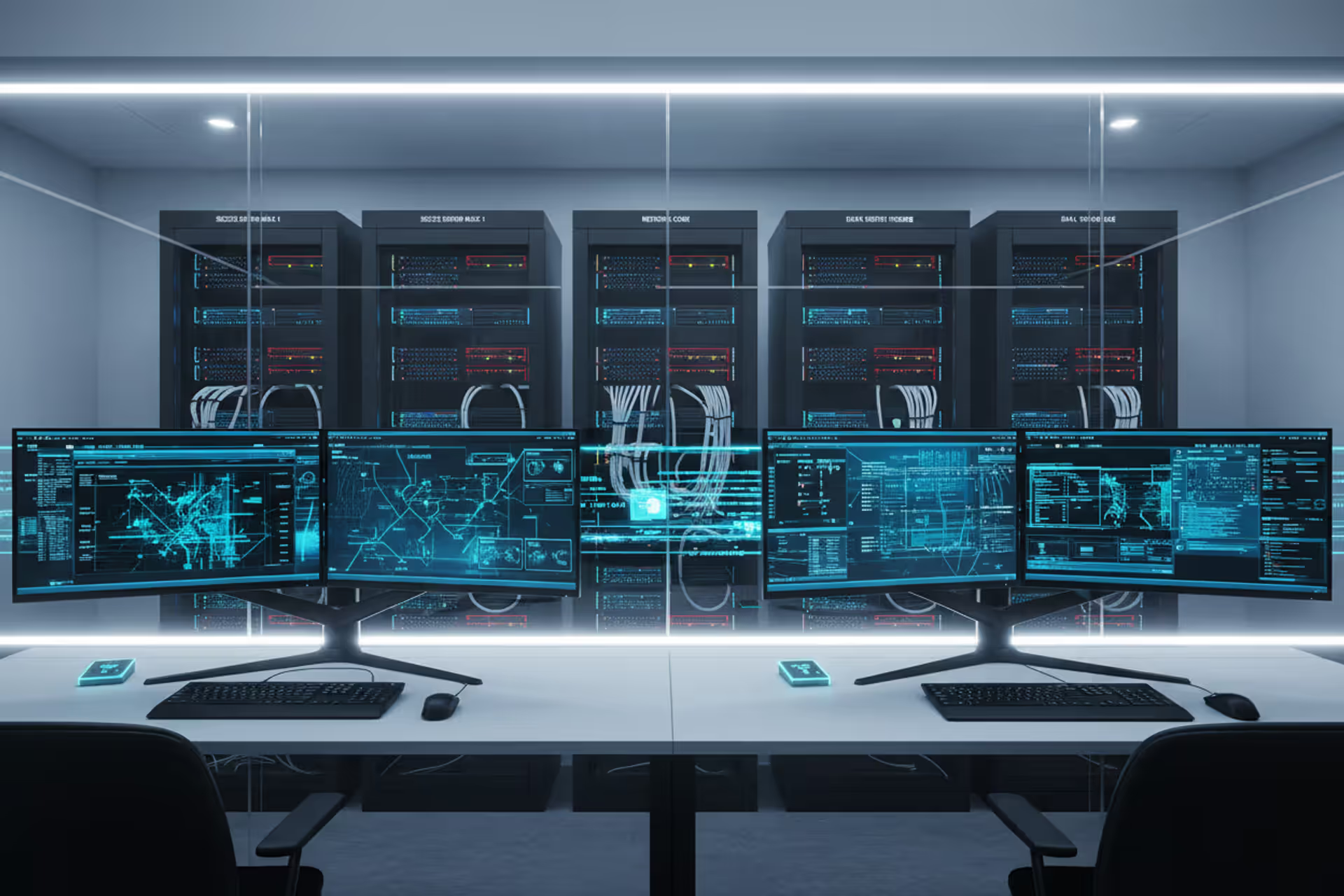
Enterprise endpoint security dashboard protecting laptops, mobile devices, servers, and workstations
Endpoint Security Architecture Guide

Endpoint security architecture is the blueprint that defines how organizations protect laptops, mobile devices, servers, and workstations from cyber threats. Unlike standalone antivirus software or basic firewalls, a comprehensive architecture integrates multiple defense layers, orchestrates threat intelligence, and automates responses across every device connecting to corporate networks.
Organizations face an expanding attack surface. Remote work, BYOD policies, and cloud migration mean endpoints now operate far beyond traditional network perimeters. A well-designed endpoint security architecture addresses this reality by establishing consistent protection regardless of device location, ensuring that a compromised laptop in a coffee shop doesn't become a gateway to sensitive databases.
What Is Endpoint Security Architecture?
Endpoint security architecture represents the structural framework that governs how security controls are deployed, managed, and coordinated across all endpoint devices within an organization. This framework encompasses the technology stack, communication protocols, policy enforcement mechanisms, and incident response workflows that collectively protect endpoints from malicious activity.
The architecture serves three primary functions. First, it prevents known threats through signature-based detection and behavioral analysis. Second, it identifies suspicious activity that evades initial defenses through continuous monitoring and anomaly detection. Third, it contains and remediates incidents before lateral movement occurs across the network.
Organizations need endpoint security architecture because point solutions create visibility gaps. A company might deploy excellent antivirus software but lack centralized logging, making it impossible to correlate events across devices during an investigation. Similarly, strong perimeter defenses become irrelevant when employees access SaaS applications directly from unmanaged devices. The architecture provides the connective tissue that transforms isolated tools into a cohesive defense system.
Modern endpoint security architecture also addresses compliance requirements. Regulations like HIPAA, PCI DSS, and GDPR mandate specific controls for data protection, access management, and audit trails. A properly designed architecture embeds these controls into the endpoint layer, ensuring that compliance becomes automatic rather than a manual checklist exercise.
Author: Daniel Prescott;
Source: williamalmonte.net
Core Components of Endpoint Security Architecture
Effective endpoint security architecture relies on several interconnected components working in concert. Each element handles specific security functions while sharing telemetry and context with other parts of the system.
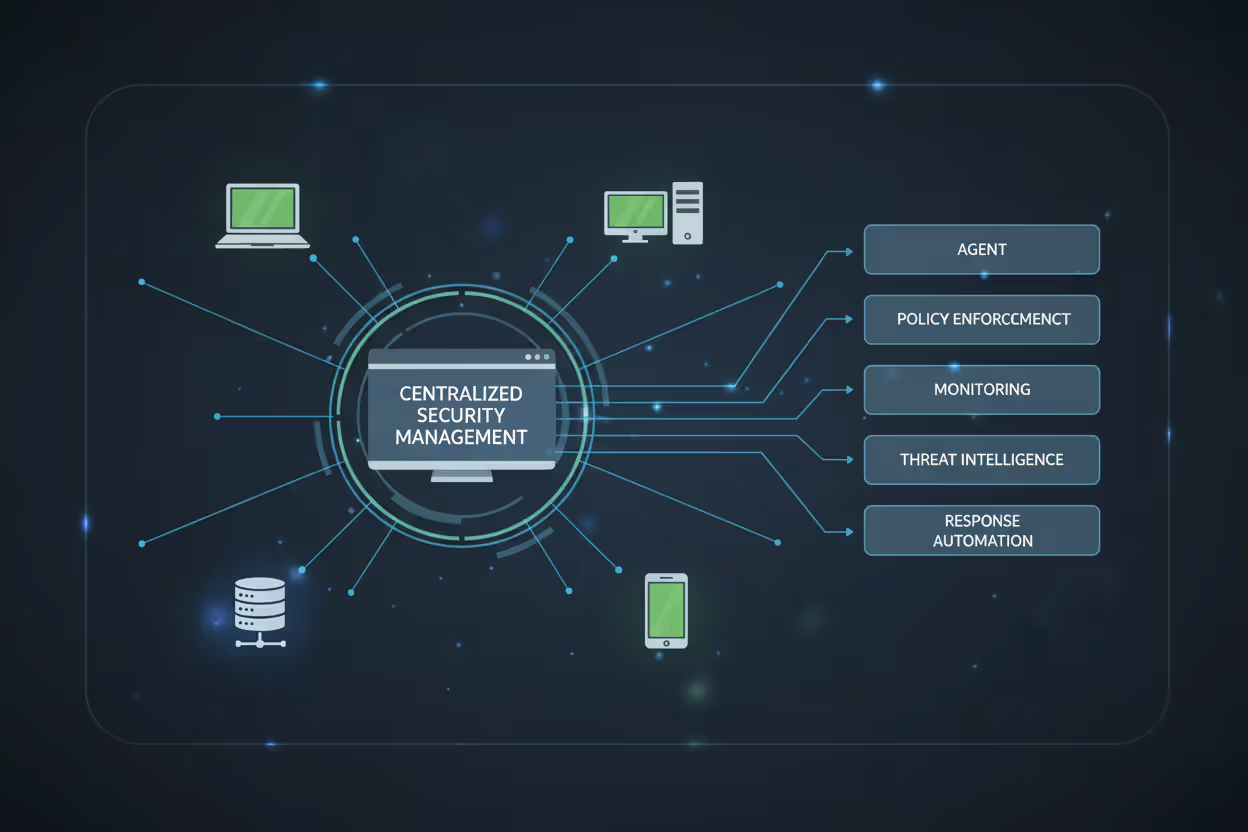
The foundation consists of lightweight agents installed on each endpoint. These agents perform local scanning, enforce security policies, monitor system behavior, and transmit security events to centralized management platforms. Agent design directly impacts system performance—poorly optimized agents consume excessive CPU and memory, degrading user experience and creating pressure to disable security controls.
Management consoles provide administrators with centralized visibility and control. These platforms aggregate alerts, display security posture dashboards, enable policy configuration, and coordinate response actions across thousands of endpoints simultaneously. The console also serves as the integration point for threat intelligence feeds, SIEM platforms, and ticketing systems.
Threat intelligence feeds supply continuously updated information about malicious indicators, attack techniques, and vulnerability exploits. The architecture ingests this intelligence and automatically updates detection rules across all endpoints without requiring manual intervention. Organizations typically combine commercial threat feeds with industry-specific intelligence sharing groups and internal threat research.
Detection engines analyze endpoint activity using multiple techniques. Signature matching identifies known malware variants. Heuristic analysis flags suspicious behavior patterns like unusual registry modifications or unexpected network connections. Machine learning models establish baseline normal behavior and alert on statistical anomalies that might indicate zero-day exploits or insider threats.
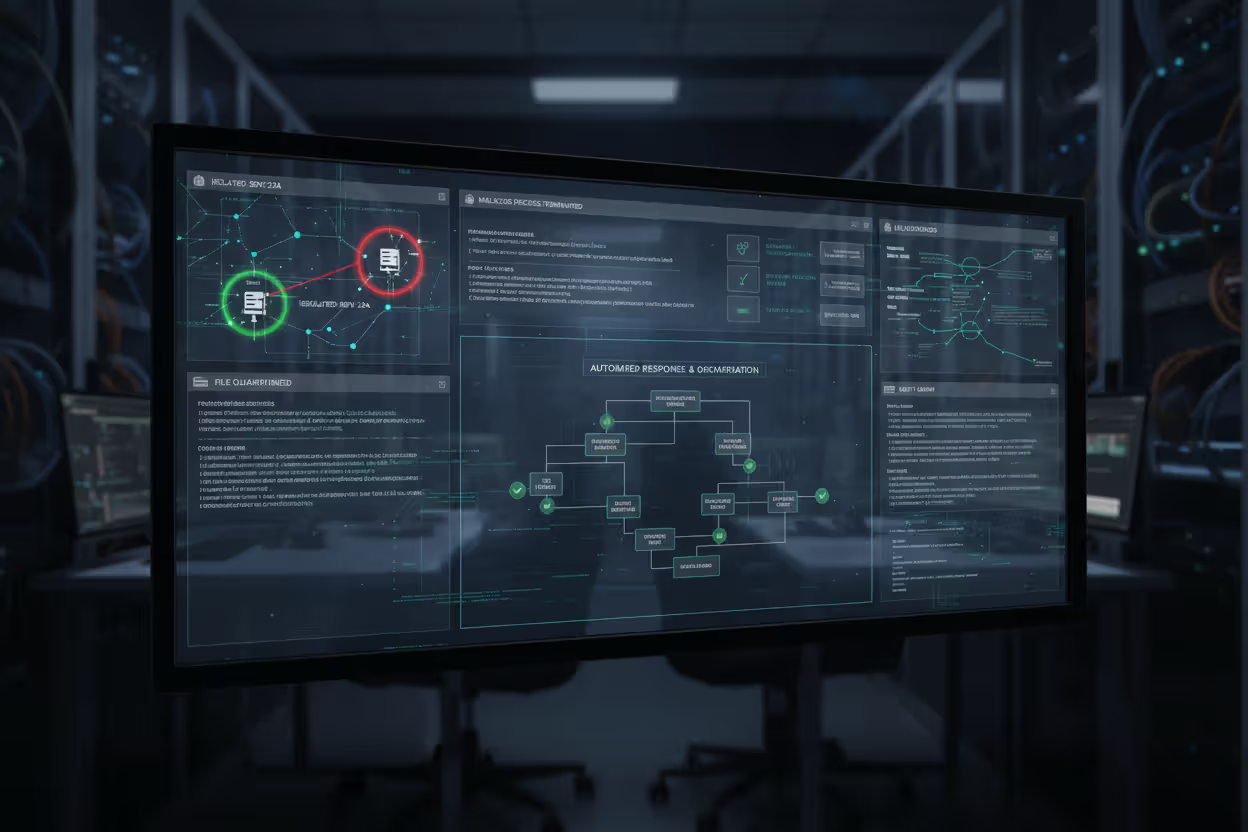
Response automation capabilities execute predefined playbooks when specific threats are detected. These might include isolating infected devices from the network, killing malicious processes, quarantining suspicious files, or reverting unauthorized system changes. Automation reduces dwell time—the period between initial compromise and containment—from days or weeks to minutes.
Endpoint Detection and Response (EDR)
EDR represents the investigative and forensic layer of endpoint security architecture. While traditional antivirus focuses on prevention, EDR assumes breaches will occur and prioritizes rapid detection and detailed investigation capabilities.
EDR systems continuously record endpoint activity—process execution, file modifications, network connections, registry changes, and user actions. This telemetry creates a searchable timeline that security analysts use to reconstruct attack sequences, identify patient zero, and determine the full scope of compromise.
The EDR component also enables threat hunting, where analysts proactively search for indicators of advanced persistent threats that evaded automated defenses. Hunters might query all endpoints for specific command-line patterns, unusual authentication events, or connections to recently identified malicious infrastructure.
Integration between EDR and Security Operations Center (SOC) workflows is critical. EDR alerts must flow into case management systems with sufficient context for analysts to make quick triage decisions. False positive rates directly impact analyst fatigue and response times—architectures should tune detection rules based on organizational environment rather than relying solely on vendor defaults.
Author: Daniel Prescott;
Source: williamalmonte.net
Antivirus and Anti-Malware Layers
Despite predictions of their obsolescence, signature-based antivirus and anti-malware engines remain valuable components of layered defense. They efficiently block commodity malware, reducing the volume of threats that more resource-intensive behavioral analysis must examine.
Modern anti-malware layers extend beyond simple file scanning. They include web filtering to block access to known malicious sites, email attachment sandboxing to detonate suspicious files in isolated environments, and application control to prevent unauthorized software installation.
The architecture must address update distribution carefully. Pushing signature updates to thousands of endpoints simultaneously can saturate network bandwidth and overwhelm update servers. Staged rollouts and peer-to-peer distribution mechanisms prevent these bottlenecks while ensuring timely protection.
Network Access Control
Network Access Control (NAC) functions as the gatekeeper determining which devices can connect to corporate networks and what resources they can access. NAC evaluates device health before granting network admission, checking for current security patches, active antivirus, and compliance with configuration baselines.
Posture assessment happens at multiple stages. Pre-admission checks occur before network access is granted. Continuous monitoring reassesses device health throughout the session, automatically quarantining devices that fall out of compliance. This prevents scenarios where a compliant device connects in the morning but disables security software later in the day.
NAC also enforces segmentation policies, directing different device types to appropriate network zones. Corporate-managed laptops might access internal resources freely, while contractor devices route through restricted VLANs with limited access. BYOD smartphones might only reach email and approved cloud applications.
How Endpoint Security Architecture Works
Understanding the operational workflow reveals how architectural components collaborate to protect endpoints throughout the threat lifecycle.
When a user attempts to download a file or execute an application, the endpoint agent first consults local policy rules and signature databases. If the file matches known malware signatures, the agent blocks execution immediately without requiring network connectivity. This local decision-making ensures protection even when devices operate offline.
For unknown files, the agent may upload samples to cloud-based sandboxing services that execute the file in a controlled environment, observing its behavior for malicious indicators. The sandbox returns a verdict—benign, malicious, or suspicious—typically within seconds. The architecture caches these verdicts locally so subsequent encounters with the same file don't require re-analysis.
Simultaneously, behavioral monitoring engines observe system activity in real-time. When processes exhibit suspicious patterns—such as a Microsoft Word instance launching PowerShell to download files from the internet—the detection engine generates an alert. The alert includes contextual information: the process tree showing parent-child relationships, the user account involved, recent file modifications, and network connections.
The alert routes to the management console where it's prioritized based on severity scoring and correlated with other security events. If multiple endpoints show similar suspicious activity within a short timeframe, the correlation engine may escalate the alert as a potential coordinated attack campaign.
Response workflows then execute based on alert type and organizational policy. High-confidence malware detections might trigger automatic isolation, disconnecting the endpoint from the network while preserving forensic evidence. Lower-confidence behavioral alerts might simply notify analysts for manual investigation while allowing the endpoint to continue operating.
Throughout this process, all events and actions are logged to centralized repositories. These logs support compliance reporting, threat hunting, and post-incident analysis. Retention policies balance storage costs against investigative needs—organizations typically retain detailed endpoint telemetry for 30-90 days with summary data kept longer.
Common Endpoint Security Architecture Models
Organizations deploy endpoint security architecture using different models based on their infrastructure, resources, and requirements.
On-premises architecture hosts all management infrastructure within the organization's data centers. Endpoint agents communicate with locally-hosted management servers, threat intelligence feeds are cached on internal systems, and security operations teams maintain the entire stack. This model provides maximum control over data residency and customization but requires significant capital investment and ongoing maintenance.
On-premises deployments suit organizations with strict data sovereignty requirements or those operating in air-gapped environments. Financial institutions handling sensitive transaction data and government agencies with classified information often prefer this model despite higher operational costs.
Cloud-based architecture leverages vendor-hosted management platforms delivered as Software-as-a-Service. Endpoint agents communicate directly with cloud infrastructure over the internet, eliminating the need for on-premises servers. Vendors handle infrastructure scaling, software updates, and threat intelligence distribution.
Cloud architectures deploy faster—organizations can protect new endpoints within minutes rather than weeks. Scaling is elastic, accommodating seasonal workforce fluctuations without capacity planning. However, organizations must trust vendors with endpoint telemetry and accept internet connectivity as a dependency for management functions.

Author: Daniel Prescott;
Source: williamalmonte.net
This model fits organizations with distributed workforces, limited IT security staff, and cloud-first strategies. Startups and mid-market companies particularly benefit from eliminating infrastructure overhead.
Hybrid architecture combines on-premises and cloud components, typically maintaining local management servers while leveraging cloud services for threat intelligence, sandboxing, and backup management access. This approach balances control with cloud benefits.
Hybrid deployments often emerge during cloud migration transitions. Organizations might maintain on-premises infrastructure for headquarters and data centers while using cloud management for remote offices and mobile workers. The architecture must synchronize policies and threat intelligence between environments to maintain consistent protection.
| Feature | On-Premises | Cloud-Based | Hybrid |
| Deployment Speed | 4-12 weeks | Hours to days | 2-6 weeks |
| Scalability | Limited by hardware capacity | Elastic, vendor-managed | Flexible, component-dependent |
| Cost Structure | High upfront CapEx, predictable OpEx | Subscription-based OpEx, variable by usage | Mixed CapEx and OpEx |
| Maintenance Requirements | Full in-house responsibility | Vendor-managed | Shared responsibility model |
| Best Use Cases | Data sovereignty requirements, air-gapped networks | Distributed workforce, rapid deployment needs | Gradual cloud migration, mixed environment |
Endpoint Security Architecture Examples in Practice
Examining specific implementation scenarios illustrates how architectural decisions address real-world challenges.
Remote workforce protection became critical as hybrid work models normalized. A technology company with 5,000 employees distributed across 30 countries needed endpoint security that functioned reliably regardless of location or network conditions.
They implemented cloud-based architecture with always-on VPN requirements eliminated in favor of zero-trust network access. Endpoint agents enforce device health checks before allowing access to corporate applications. When employees work from home networks, the architecture provides the same protection as corporate office environments.
The system uses geolocation data to detect anomalies—if an employee's laptop typically operates in Germany but suddenly appears in Nigeria, the architecture triggers additional authentication requirements and alerts security teams. Device encryption is verified at every authentication, and lost or stolen devices can be remotely wiped through the cloud management console.
Healthcare compliance demands strict controls over devices accessing protected health information. A hospital network with 15,000 endpoints including medical devices, workstations, and mobile devices implemented hybrid architecture to meet HIPAA requirements while maintaining operational reliability.
On-premises management servers handle medical devices that cannot communicate with external networks due to FDA restrictions. Cloud-based management covers administrative workstations and mobile devices used by physicians for patient consultations. The architecture enforces role-based access controls, ensuring that billing department workstations cannot access clinical systems.
All endpoint activity involving patient data generates audit logs retained for seven years. The architecture automatically flags policy violations—such as attempts to copy patient records to USB drives—and blocks the action while creating incident tickets. Regular compliance reports demonstrate continuous monitoring to auditors without manual log review.
Financial services faces sophisticated threats targeting transaction systems and customer data. An investment firm deployed on-premises architecture with air-gapped management infrastructure isolated from internet-connected networks.
Trading floor workstations operate in a highly restricted environment where application whitelisting permits only approved software. The endpoint security architecture monitors for indicators of market manipulation malware and insider trading activity. Machine learning models establish normal trading patterns for each user, alerting on statistical anomalies that might indicate account compromise.
The architecture integrates with data loss prevention systems to prevent unauthorized transmission of trading algorithms or client portfolios. When employees depart, endpoint agents automatically wipe corporate data from devices during the exit process.
The most sophisticated endpoint security architecture fails if it doesn't account for human factors. We've seen organizations invest millions in advanced threat detection only to have users disable agents because they slowed down systems. Successful architectures balance security efficacy with performance impact and provide clear value to end users, not just security teams
— Dr. Sarah Chen
Key Considerations When Designing Endpoint Security Architecture
Successful implementations require careful attention to several critical factors beyond technology selection.
Scalability planning must account for growth trajectories and peak demands. An architecture supporting 1,000 endpoints may fail catastrophically at 10,000 without proper capacity planning. Consider how management infrastructure handles simultaneous agent check-ins during morning login storms, large-scale software deployments, and emergency threat intelligence updates pushed to all endpoints.
Design for horizontal scaling where adding capacity means deploying additional management servers rather than upgrading existing hardware. Cloud architectures handle this automatically, but on-premises deployments need explicit scaling mechanisms.
Integration requirements determine how well endpoint security architecture meshes with existing tools. The architecture should feed alerts into SIEM platforms, synchronize user identity with directory services, coordinate with network security controls, and integrate with IT service management systems.
API availability and documentation quality matter significantly. Proprietary systems with limited integration capabilities create information silos that reduce overall security effectiveness. Evaluate whether the architecture supports standard formats like STIX/TAXII for threat intelligence exchange and whether it can ingest threat data from multiple sources.
Compliance alignment ensures the architecture satisfies regulatory requirements specific to your industry and geography. Different regulations mandate varying controls—some require data residency within specific countries, others demand particular encryption standards or audit capabilities.
Map compliance requirements to architectural components during design rather than attempting retrofits later. For example, if regulations require multi-factor authentication before accessing sensitive data, ensure the architecture can enforce this at the endpoint level before application access occurs.
User experience impact directly affects adoption and security culture. Overly restrictive controls that impede legitimate work create pressure to bypass security measures. Endpoint agents that slow system performance lead to complaints and potential disablement.
Measure and optimize agent resource consumption during testing. Establish performance baselines before deployment and monitor continuously after rollout. When implementing new controls like application whitelisting, phase rollout gradually with clear communication about why restrictions exist and how users can request exceptions.
Balance security and productivity through risk-based policies. Executives handling merger negotiations may need more restrictive controls than employees performing routine administrative work. The architecture should enable granular policy assignment based on user roles, data sensitivity, and threat context.
Frequently Asked Questions About Endpoint Security Architecture
Endpoint security architecture forms the defensive foundation protecting organizations against threats targeting laptops, mobile devices, servers, and workstations. A well-designed architecture integrates prevention, detection, and response capabilities into a cohesive system that functions reliably regardless of device location or network conditions.
Successful implementations balance multiple considerations: selecting the appropriate deployment model for your infrastructure and workforce, ensuring scalability to accommodate growth, integrating with existing security and IT tools, meeting compliance requirements, and maintaining acceptable user experience. The architecture must evolve continuously as threat landscapes shift, business requirements change, and new technologies emerge.
Organizations beginning their endpoint security architecture journey should start by clearly defining requirements, inventorying existing endpoints and security tools, and identifying gaps in current protection. Pilot deployments allow testing architectural decisions before full-scale rollout, revealing performance impacts and integration challenges in controlled environments.
The investment in comprehensive endpoint security architecture pays dividends through reduced breach risk, faster incident response, simplified compliance reporting, and improved security team efficiency. As endpoints multiply and threats grow more sophisticated, organizations with mature architectures will maintain protection while those relying on fragmented point solutions struggle with visibility gaps and coordination failures.
Related Stories

Read more

Read more


The content on this website is provided for general informational and educational purposes only. It is intended to explain concepts related to endpoint security, cybersecurity practices, threat prevention, and security technologies.
All information on this website, including articles, guides, and examples, is presented for general educational purposes. Cybersecurity requirements and implementations may vary depending on organizational needs, infrastructure, regulatory requirements, and threat environments.
This website does not provide professional cybersecurity, legal, or compliance advice, and the information presented should not be used as a substitute for consultation with qualified cybersecurity professionals.
The website and its authors are not responsible for any errors or omissions, or for any outcomes resulting from decisions made based on the information provided on this website.